Tuesday, 30 September 2014

13,300 year-old spear made from a rhino horn found in Siberia

  • A spear made from a woolly rhino horn which has been unearthed on an island in Siberia could be more than 13,300 years old, said a report. 
  • The spear, used by Palaeolithic man in the Arctic, was discovered on the island of Bolshoy Lyakhovsky, off the north coast of Siberia.
  • The horn was uncovered by paleontologists searching for mammoth remains on the Arctic island.
  • This find helps our understanding of how far north people penetrated in the Palaeolithic Era.
  • The spear could have been used to kill woolly mammoths and rhinos, both of which became extinct thousands of years ago in Siberia.

Monday, 29 September 2014

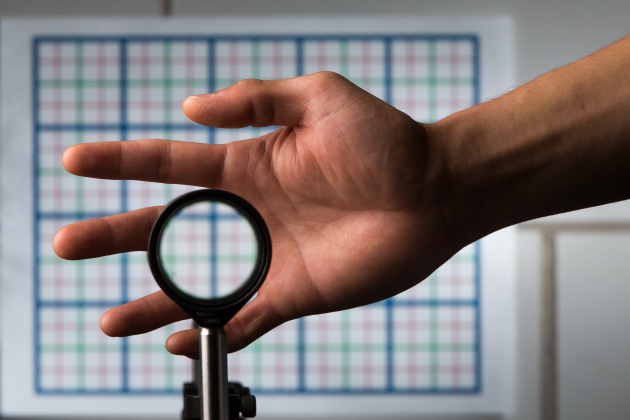
A way to hide large objects from sight at Rochester university called cloaking


  • Previous cloaking methods have been complicated, expensive, and not able to hide objects in three dimensions when viewed at varying angles.
  • The system developed at Rochester university uses four lenses,with basic,readily available optics
  • This provides three-dimensional, continuously multidirectional cloaking.
  • The researchers have cloaked a hand, a face, and a ruler - making each object appear "invisible" while the image behind the hidden object remains in view.
  • However this not too expensive says the founders.


Friday, 26 September 2014

Earth water is older than sun

The sun, at 4.6 billion years old, predates all the other bodies in our solar system. But it turns out that much of the water we swim in and drink here on Earth is even older.

A new model of the chemistry of the early solar system finds that up to half the water now on Earth was inherited from an abundant supply of interstellar ice as our sun formed. That means our solar system’s moisture wasn’t the result of local conditions in the proto-planetary disk, but rather a regular feature of planetary formation — raising hopes that life could indeed exist elsewhere in the universe.

For more:http://blogs.discovermagazine.com/d-brief/2014/09/25/earths-water-is-older-than-the-sun/#.VCYbAha7NHM

Google glass risks drivers.

  • The first scientific study of driving while texting with Google Glass found that the hands-free eyewear is no safer to use on the road than a smartphone.

  • "When you look at how fast people react to an unexpected traffic event – how fast they slam on their brakes, we didn’t find a statistically significant difference between Google Glass and smartphones"said psychological researcher Ben Sawyer at the University of Central Florida.
  • That, he said, is critical for certain drivers whose safety can depend on information obtained on the road, including military and emergency personnel. 

Thursday, 25 September 2014

Solar cell powers water-to-hydrogen conversion

A class of materials that has quickly become the rising star of the solar cell world could enable production of hydrogen fuel using sunlight.
Michael Grätzel a chemist in in Switzerland, and colleagues built a photovoltaic device using cheap and abundant materials called perovskites.
Grätzel’s group describes a device that uses sunlight to split water into oxygen and hydrogen gas with 12.3 percent efficiency. That figure puts the device above the 10 percent benchmark for useful solar-to-hydrogen conversion. Hydrogen holds promise as clean fuel to power cars or produce electricity.