Sunday, 5 October 2014

Internet is going to boost 100 times than existing.

  • Graphene in telecommunications could make the internet a hundred times faster than existing. 
  • Researchers from the Universities of Bath and Exeter have shown that a few layers of graphene stacked on top of each other could act as a formidable material for optical switches, delivering speeds up to 100 times faster than current telecommunications technology.
    http://media2.s-nbcnews.com/i/newscms/2014_16/325831/140415-tech-graphene2_5a7bdfa7b9f6c1c5b7bba8c5555e13aa.jpg
  • Ordinarily optical switches respond at rate of a few picoseconds - around a trillionth of a second. Through this study physicists have observed the response rate of an optical switch using 'few layer graphene' to be around one hundred femtoseconds - nearly a hundred times quicker than current materials. 
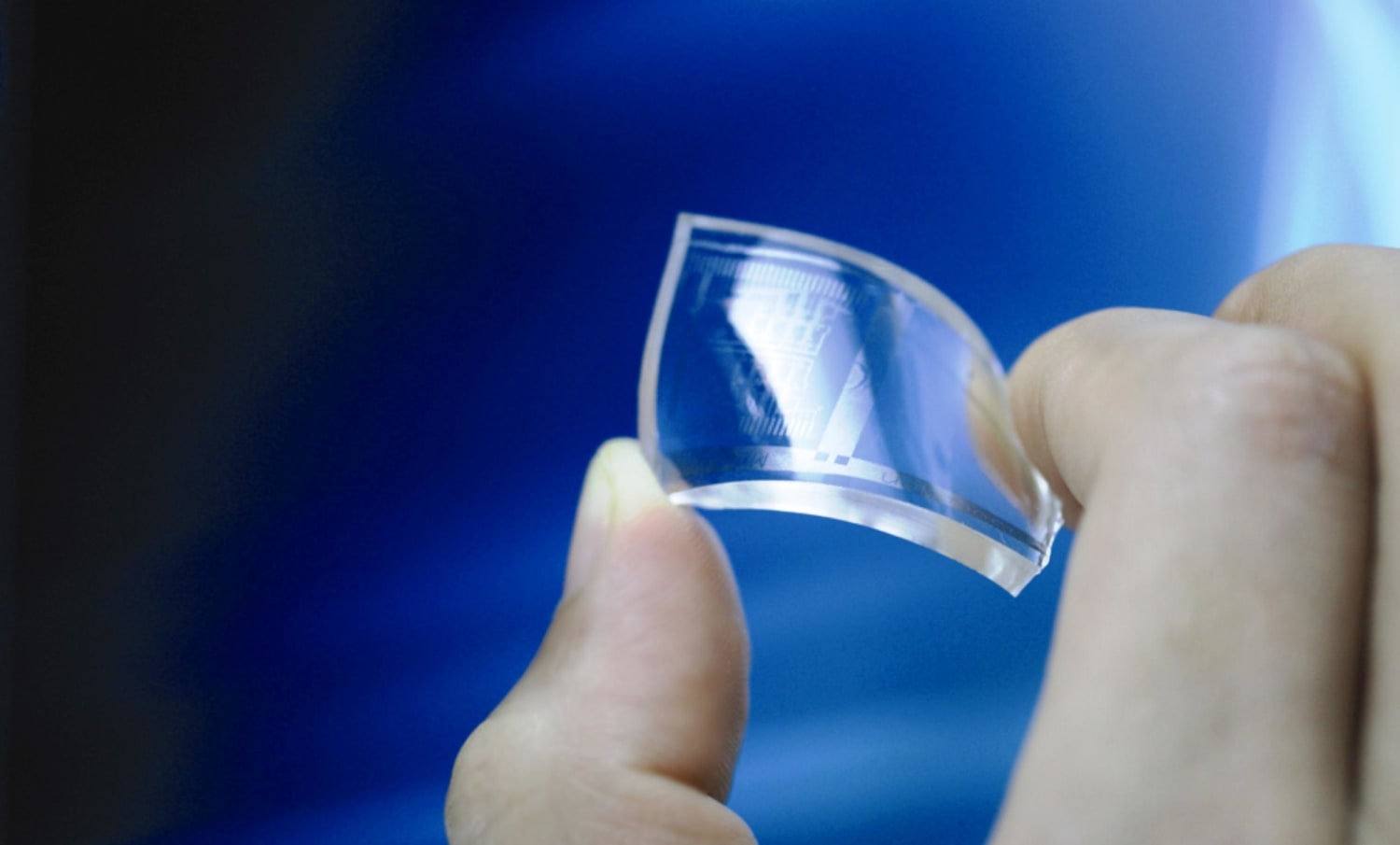
  • Graphene is pure carbon in the form of a very thin, nearly transparent sheet, one atom thick. It is remarkably strong for its very low weight (100 times stronger than steel) and it conducts heat and electricity with great efficiency.  
  • "We've seen an ultrafast optical response rate, using 'few-layer graphene', which has exciting applications for the development of high speed optoelectronic components based on graphene," lead researcher Dr Enrico Da Como said.
  • I think this technology should research faster .
  • The study was published in Physical Review Letters.
     

Saturday, 4 October 2014

Scientists Discover How to Produce Oxygen Without Plants

  • There's new scientific evidence that shows oxygen can be produced without the help of photosynthesis from green plants.
  • Scientists revealed that the breakthrough can bring about a better understanding of how the Earth's early atmospheric oxygen was formed before there were plants, and how oxygen may also exist in the atmosphere of other planets that have no vegetation.
  • According to researchers from the University of California, carbon dioxide molecules break in half if they experience specific wavelengths of light radiation. The result is a C molecule and an O2 molecule.
  • Scientists previously thought that dioxide molecules separated into a CO and O molecule regardless of what light wavelength they're exposed to since this is considered as a molecular process where least resistance is involved.
  • Researchers revealed that to separate CO and O molecules from the carbon dioxide molecule, five electron volts are needed to break them, but for C and O2 to come together, an energy of around 11.4 electron volts is required.
  • According to Arthur Suits, a chemist at Wayne State University in Detroit, the molecular behavior of carbon dioxide is very difficult to study when exposed to high energies.
  • The results are not consistent, however, as researchers say experiments yielded a C and O2 result of only five percent when carbon dioxide molecules are exposed to intense light radiation.
  • Author Cheuk-Yiu Ng from the University of California said that when carbon dioxide molecules are hit with this type of radiation, they can break apart in more than one channel and some five percent were the only CO2 that became C and O2.
  • Suits added these findings may provide clues how oxygen formed in the Earth's atmosphere and in other planets and even dying stars and interstellar dust clouds.
  • The study was published in the journal, Science.

First rechargeable solar battery

  • It’s a solar cell! No… it’s a rechargeable lithium-air battery! No… wait… it’s both: It’s the world’s first all-in-one solar battery!
  • Integrating the function of a solar panel that captures light, and a cheap battery that stores energy into one hybrid device, researchers have successfully invented the world’s first solar battery.
  • The device will help bring down the costs of renewable energy by 25 percent, the researchers said.The key to the innovation is a mesh solar panel that allows air to enter the battery, and a special process for transferring electrons between the solar panel and the battery electrode.Inside the device, light and oxygen enable different parts of the chemical reactions that charge the battery.
  • The invention also solves a longstanding problem in solar energy efficiency, by eliminating the loss of electricity that normally occurs when electrons have to travel between a solar cell and an external battery.
  • “With this new design, light is converted to electrons inside the battery, so nearly 100 percent of the electrons are saved,” the researchers said. 
http://www.extremetech.com/extreme/191438-this-air-breathing-solar-panel-stores-its-own-electricity-cutting-the-cost-of-solar-power-significantly

Thursday, 2 October 2014

Wonder material that obsorb the oxygen


  • Researchers have developed a new crystalline material that absorbs oxygen in large quantities and stores it. The material is so effective at binding oxygen that only a spoon of it is enough to suck up all the oxygen in a room.
  • According to researchers from University of Southern Denmark (USD), the substance can absorb and bind oxygen in a concentration 160 times greater than the concentration in the air around us.
  • The stored oxygen can be released again when and where it is needed.
  • The key component of the new material is the cobalt which is bound in a specially designed organic molecule.
  • It can absorb and release oxygen many times without losing the ability.
  • It is like dipping a sponge in water, squeezing the water out of it and repeating the process over and over again

Wednesday, 1 October 2014

anti-pollution suit to clean air around you

The researchers from Eindhoven University have developed BB.Suit 0.2: Wearable Clean Air, a garment which improves air quality.

The anti-pollution suit utilizes cold plasma technology to split water and oxygen molecules into free radicals, which react with toxic gases in the air to purify it.

The suit has been incorporated with an air quality sensor that monitors the levels of methane, LPG and carbon monoxide in the surrounding air. It collects geo-localised data and allows extensive analysis of the problem.

The BB suit: wearable air cleaning exhibition is held in Dashilar district in Beijing. It shows how future clothing can contribute to the health and comfort of people residing in polluted urban areas.

The high voltage components in the suit are locked safely in a sealed case, thus making it safe and secure to wear.