Saturday, 4 October 2014

First rechargeable solar battery

  • It’s a solar cell! No… it’s a rechargeable lithium-air battery! No… wait… it’s both: It’s the world’s first all-in-one solar battery!
  • Integrating the function of a solar panel that captures light, and a cheap battery that stores energy into one hybrid device, researchers have successfully invented the world’s first solar battery.
  • The device will help bring down the costs of renewable energy by 25 percent, the researchers said.The key to the innovation is a mesh solar panel that allows air to enter the battery, and a special process for transferring electrons between the solar panel and the battery electrode.Inside the device, light and oxygen enable different parts of the chemical reactions that charge the battery.
  • The invention also solves a longstanding problem in solar energy efficiency, by eliminating the loss of electricity that normally occurs when electrons have to travel between a solar cell and an external battery.
  • “With this new design, light is converted to electrons inside the battery, so nearly 100 percent of the electrons are saved,” the researchers said. 
http://www.extremetech.com/extreme/191438-this-air-breathing-solar-panel-stores-its-own-electricity-cutting-the-cost-of-solar-power-significantly

Thursday, 2 October 2014

Wonder material that obsorb the oxygen


  • Researchers have developed a new crystalline material that absorbs oxygen in large quantities and stores it. The material is so effective at binding oxygen that only a spoon of it is enough to suck up all the oxygen in a room.
  • According to researchers from University of Southern Denmark (USD), the substance can absorb and bind oxygen in a concentration 160 times greater than the concentration in the air around us.
  • The stored oxygen can be released again when and where it is needed.
  • The key component of the new material is the cobalt which is bound in a specially designed organic molecule.
  • It can absorb and release oxygen many times without losing the ability.
  • It is like dipping a sponge in water, squeezing the water out of it and repeating the process over and over again

Wednesday, 1 October 2014

anti-pollution suit to clean air around you

The researchers from Eindhoven University have developed BB.Suit 0.2: Wearable Clean Air, a garment which improves air quality.

The anti-pollution suit utilizes cold plasma technology to split water and oxygen molecules into free radicals, which react with toxic gases in the air to purify it.

The suit has been incorporated with an air quality sensor that monitors the levels of methane, LPG and carbon monoxide in the surrounding air. It collects geo-localised data and allows extensive analysis of the problem.

The BB suit: wearable air cleaning exhibition is held in Dashilar district in Beijing. It shows how future clothing can contribute to the health and comfort of people residing in polluted urban areas.

The high voltage components in the suit are locked safely in a sealed case, thus making it safe and secure to wear.

Tuesday, 30 September 2014

13,300 year-old spear made from a rhino horn found in Siberia

  • A spear made from a woolly rhino horn which has been unearthed on an island in Siberia could be more than 13,300 years old, said a report. 
  • The spear, used by Palaeolithic man in the Arctic, was discovered on the island of Bolshoy Lyakhovsky, off the north coast of Siberia.
  • The horn was uncovered by paleontologists searching for mammoth remains on the Arctic island.
  • This find helps our understanding of how far north people penetrated in the Palaeolithic Era.
  • The spear could have been used to kill woolly mammoths and rhinos, both of which became extinct thousands of years ago in Siberia.

Monday, 29 September 2014

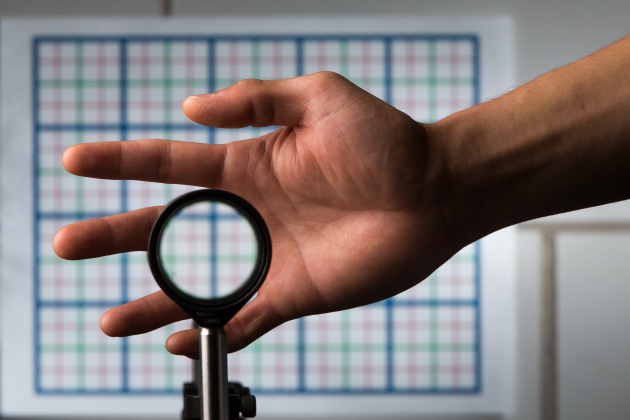
A way to hide large objects from sight at Rochester university called cloaking


  • Previous cloaking methods have been complicated, expensive, and not able to hide objects in three dimensions when viewed at varying angles.
  • The system developed at Rochester university uses four lenses,with basic,readily available optics
  • This provides three-dimensional, continuously multidirectional cloaking.
  • The researchers have cloaked a hand, a face, and a ruler - making each object appear "invisible" while the image behind the hidden object remains in view.
  • However this not too expensive says the founders.